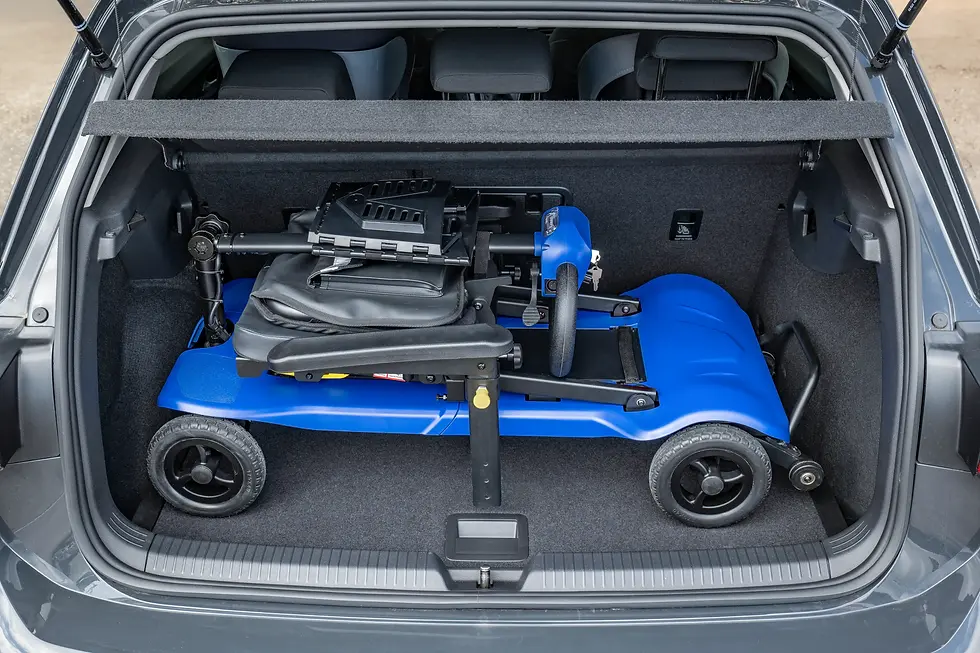
Understanding the True Meaning of Lightweight Mobility Scooters

When you begin looking for a mobility scooter, the word lightweight often stands out. It promises ease, convenience, and simple handling. But what does lightweight really mean? The truth is, lightweight is a relative term that depends on many factors beyond just the number on the scale.
What Does Lightweight Mean in Mobility Scooters?
In the mobility scooter world, anything under 30 kilograms (about 66 pounds) is usually called lightweight. That might seem manageable at first glance, but 30 kilograms is over 4½ stone. For some people, lifting that weight repeatedly is no problem. For others, it can be unsafe or even impossible.
Think about the real-life situations where you need to lift or move your scooter:
Lifting it into a car boot
Taking it out again at your destination
Maneuvering it over bumps or curbs
Twisting or bending while lifting
Getting it through narrow doorways or into storage spaces
These tasks are very different from simply picking up a box in a store. The conditions are rarely perfect, and the effort can add up quickly.
Everyone’s Strength and Ability Are Different
In our experience, people vary widely in what they can comfortably lift. One person might handle 25 kilograms with ease, while another struggles with 18 kilograms. Factors that affect this include:
Shoulder or back problems
Grip strength
Balance and coordination
Age and height
Previous injuries
Confidence in lifting
Because of this, a label on a website that says “lightweight” does not tell the full story. What feels light to one person might feel heavy or awkward to another.
It’s Not Just the Total Weight That Matters
Many lightweight scooters come apart into smaller pieces. This helps, but you still need to consider:
The weight of the heaviest single part
The shape and grip points of each piece
Whether you have to bend low to lift
The height of your car boot or storage space
Whether you will be lifting the scooter alone
For example, a scooter might weigh 28 kilograms in total, but if the heaviest section is 17 kilograms and awkward to hold, that is the real challenge. The way the parts fit together and how easy they are to carry can make a big difference.

Why Trying Before You Buy Is Essential
This is where buying locally can make a huge difference. When you visit a mobility scooter dealer, you can:
Physically lift the scooter yourself
Try dismantling and reassembling it
Check how it fits in your car boot or storage space
Get advice tailored to your strength and needs
Trying before buying helps you avoid surprises and ensures you choose a scooter that works for your lifestyle and physical ability.
Practical Tips for Choosing a Lightweight Scooter
Here are some tips to keep in mind when shopping for a lightweight mobility scooter:
Test the heaviest part: Lift the largest section to see if you can manage it safely.
Check grip points: Look for handles or grips that feel secure and comfortable.
Consider your car boot height: Measure your car’s boot and try fitting the scooter parts inside.
Think about lifting alone: If you usually lift the scooter by yourself, make sure it feels manageable.
Ask about dismantling: Some scooters break down into more pieces, making them easier to carry.
Beyond Weight: Other Factors That Affect Mobility Scooter Use
Weight is important, but it’s not the only factor to consider. Other features can affect how easy a scooter is to use and transport:
Battery life and charging: Longer battery life means fewer stops and less hassle.
Scooter size and width: Narrower scooters fit better through doorways and tight spaces.
Turning radius: A smaller turning radius helps with maneuvering indoors.
Comfort and seat adjustability: A comfortable seat reduces fatigue during use.
Storage options: Baskets or compartments add convenience.
Balancing these features with weight will help you find the best scooter for your needs.
Real-Life Example: Sarah’s Experience
Sarah, a 68-year-old with mild arthritis, wanted a lightweight scooter for travel. She found a model labeled as lightweight at 29 kilograms. When she tried lifting it, she struggled with the heaviest part, which was 18 kilograms and awkwardly shaped. After testing a different model that broke down into four smaller pieces, with the heaviest part only 12 kilograms, she found it much easier to manage. This made a big difference in her confidence and independence.
Final Thoughts on Lightweight Mobility Scooters
Lightweight means different things to different people. The number on the scale is just one part of the story. How the scooter breaks down, the weight of individual parts, your physical ability, and the real-world conditions all matter.
If you are shopping for a mobility scooter, take the time to test models in person. Lift the parts, try dismantling them, and think about how you will use the scooter every day. This approach will help you find a scooter that truly feels lightweight and easy to manage.